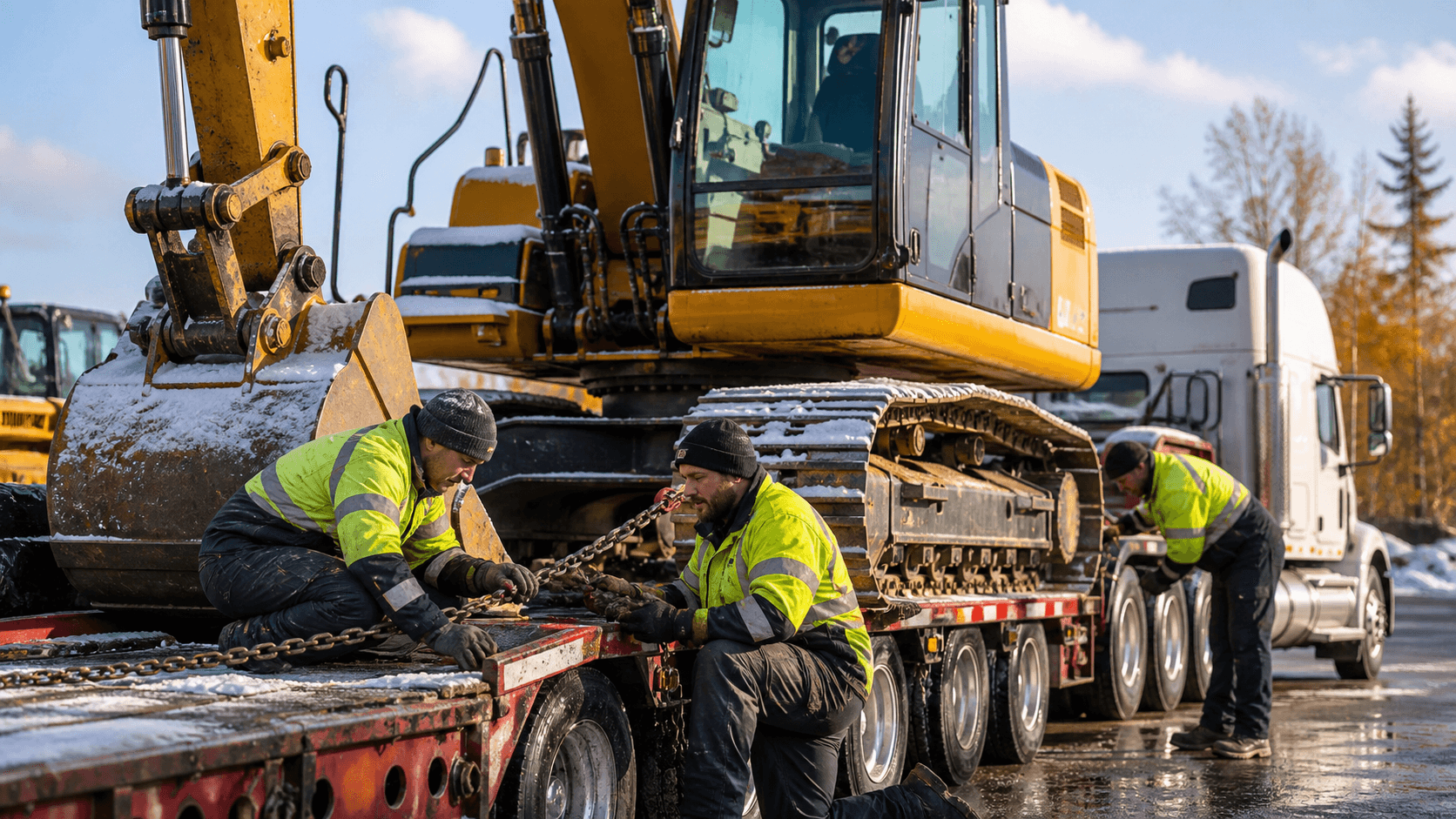
Common Heavy Equipment Transport Mistakes Before Winter
Early October is a smart time to prepare heavy equipment transport plans before the first freeze changes the road conditions. Snow, ice, high winds, and shorter daylight hours can affect pickups, loading, routes, and delivery timing. A successful winter move starts well before your equipment reaches the trailer.
At BoxBee Logistics, we help coordinate secure door-to-door transportation for equipment moves across the country and internationally. By planning ahead, you can avoid common mistakes that put equipment, crews, and project schedules under added pressure when seasonal weather arrives.
Inspect Equipment Before Heavy Equipment Transport
Sending machinery out without a full inspection is one of the easiest mistakes to avoid. A small issue that seems manageable at your yard can become a loading or unloading problem in cold, wet weather. Fluid leaks, weak batteries, damaged tires or tracks, loose attachments, and mechanical trouble may all create safety concerns during transport.
Before booking, we recommend gathering clear details about the equipment's current condition. This gives us and the carrier a better starting point for planning the right heavy equipment transport method and documenting the load before pickup.
Helpful information to prepare includes:
- Photos from multiple angles
- Serial numbers and equipment dimensions
- Accurate weight and operating status
- Details about attachments, damage, or known mechanical issues
Winter prep matters, too. Snow, mud, and ice should be removed from steps, decks, tracks, and attachment points before loading. Depending on the machine and shipping plan, vulnerable fluids may need attention, antifreeze protection should be checked, and battery connections should be secure. Clean, well-documented equipment is safer to load and easier to inspect at delivery.
Match Trailer Capacity to Winter Road Conditions
Choosing a trailer based only on availability can lead to trouble. Equipment size, weight, height, ground clearance, and loading needs all affect which trailer is appropriate. A standard flatbed may work for some machines, while other loads may need a step deck, lowboy, removable gooseneck, or another specialized option.
Wet or icy conditions can make loading angles and traction more difficult than they are in dry weather. A machine that loads easily on a clear day may need extra planning when ramps are slick, the ground is frozen, or snow has built up around the pickup site. Trailer stability and clearance also deserve a close look when road conditions are less predictable.
Accurate details help us coordinate the proper setup from the start. Before heavy equipment transport is arranged, share the exact machine model, dimensions, weight, ground clearance, and any attachments that will travel with it. With a complete picture of the shipment, we can help line up suitable equipment, securement needs, and a driver prepared for the move.
Secure Permits and Prepare Weather-Ready Loads
Oversize and overweight loads may require permits, route approvals, escort vehicles, and advance scheduling. Waiting until the last minute can create delays, especially when seasonal restrictions begin or weather affects available travel routes. A route that worked during summer may not be the best choice once mountain passes close, lanes narrow, construction detours change, or a snow emergency is in effect.
Shorter daylight hours can also change how a move is planned. Pickup and delivery windows may need to allow for slower travel, reduced visibility, and unexpected road closures. We help review the shipment details early so permit needs and route limitations can be identified before they disrupt your schedule.
Securement should receive the same level of attention. Heavy equipment needs the right chains, binders, tie-down points, blocking, and attachment protection to stay stable through rough roads and changing weather. Rain, snow, wind, road salt, and freezing temperatures can expose sensitive parts during transit.
Consider these questions before pickup:
- Will buckets, blades, booms, forks, or other attachments stay installed?
- Do removable parts need separate transport?
- Are hydraulic lines, electronics, or cab interiors exposed to weather?
- Will the attachment change the load's height, width, or weight distribution?
Clear answers help us plan securement that fits the actual load, not a guess made at the last minute.
Book Heavy Equipment Transport Before Capacity Tightens
Late booking is a common seasonal mistake because winter conditions can affect more than one shipment at a time. Weather delays may push other loads back, drivers may need to avoid difficult routes, and specialized trailers can become harder to schedule. When equipment has to move quickly, fewer options can make planning more stressful.
We encourage you to schedule as early as possible, especially for oversized machinery, remote delivery locations, multi-unit moves, port-related drayage, or loads that require permits. Early planning gives us more time to coordinate a trailer that fits the machine and prepare for route restrictions before they become urgent.
Flexibility also helps protect your timeline. Reasonable pickup and delivery windows give carriers room to work around storms, icy roads, high winds, and temporary closures without rushing a move that should be handled safely. Building that flexibility into the project schedule can make a big difference once winter weather begins.
Build a Safer Winter Shipping Plan
Winter equipment moves require more than selecting a pickup date. At BoxBee Logistics, we coordinate nationwide and international transportation with door-to-door service and 24/7 support when conditions shift unexpectedly. Careful load details, trailer planning, permit coordination, and weather-aware scheduling all help us keep the shipment organized from pickup through delivery.
The best time to prevent winter delays is before the first major storm. Inspect the machine, confirm its dimensions and attachments, allow time for route planning, and avoid treating securement as an afterthought. A well-prepared shipment is better positioned to stay safe and keep your project moving when the weather turns.
Keep Your Equipment Move On Schedule
BoxBee Logistics helps you coordinate dependable heavy equipment transport with the details your shipment demands. Our team can help verify load requirements, select suitable equipment, and build a practical delivery plan. When you are ready to discuss an upcoming move, contact us for tailored support.