Moving your boat before winter weather settles in can prevent a lot of stress. Cold temperatures, strong winds, marina closures, and limited water access can make late-season moves harder than expected. We recommend planning ahead if your boat needs to reach storage, a repair facility, a warmer climate, or a new home.
Early arrangements also give you more room to choose a pickup window and prepare the vessel properly. At BoxBee Logistics, we coordinate nationwide and global boat transportation, including door-to-door service and shipping support for a range of vessel sizes and destinations.
Protect Your Boat Before Winter Weather Arrives
Winter can arrive quickly, especially when a marina is closing or a storm is on the way. Leaving a boat exposed to freezing temperatures, wind, and rough conditions may create avoidable concerns, especially if it still needs to be moved or stored.
Boat transport services can help you get ahead of seasonal changes. Rather than waiting for icy roads, packed storage yards, or limited carrier schedules, you can arrange a move while access points and weather conditions are more manageable.
A planned move may make sense when you are relocating your boat to:
- Indoor or covered winter storage
- A warmer destination for year-round use
- A maintenance or repair facility
- A new marina or home after a seasonal sale
When a long-distance water route is impractical late in the season, overland transport can provide a more direct way to relocate the vessel. We help coordinate transport plans based on your boat's size, pickup site, destination, and handling needs.
When Boat Transport Services Make Sense
Different boats call for different planning. A trailerable fishing boat may have very different needs than a sailboat with a tall mast or a larger yacht with a wide beam. Before a move is arranged, we look at the vessel's dimensions, weight, trailer condition, and pickup and delivery requirements.
Owners often use boat transport services before winter for more than storage. Some are moving a pontoon boat south, while others need to deliver a center console to a buyer or bring a personal watercraft collection to a new property. We also see boats headed to service locations when maintenance needs to happen before the next season.
Transport planning may be needed for:
- Fishing boats and center consoles
- Pontoon boats and personal watercraft
- Sailboats with mast or height considerations
- Yachts and larger vessels
- Boats that travel on their own trailers
Late October and November can be busy times for boat moves. Marinas may be preparing spaces for winter storage, and many owners are working against colder conditions. Booking earlier is especially helpful when you need a preferred pickup date or have a large vessel that requires special equipment.
Prepare Your Boat and Transport Plan
Good preparation helps protect your boat and gives everyone a clearer picture of its condition before loading. We recommend taking clear photos of the hull, deck, interior, trailer, and any existing wear. Remove personal belongings, secure loose gear, and make note of anything the carrier should know before pickup.
Your boat should also be ready for the season. Depending on the vessel and the weather, water systems may need attention, and engines should be winterized according to manufacturer guidance by qualified service professionals. Canvas covers, antennas, electronics, and other exposed parts may need to be removed or secured for transport.
Before pickup, review these details:
- Hull, trailer, tire, light, and tie-down condition
- Fuel level and battery status
- Loose equipment, covers, and personal items
- Special handling instructions for fragile components
- Photos showing the boat's condition before loading
Paperwork and site access matter just as much as physical preparation. Have registration and insurance information available, along with marina contact details and clear pickup instructions. If the boat is at a marina, confirm gate hours, launch ramp access, travel lift availability, and any required certificates before the carrier arrives.
Choose the Right Equipment, Route, and Delivery Details
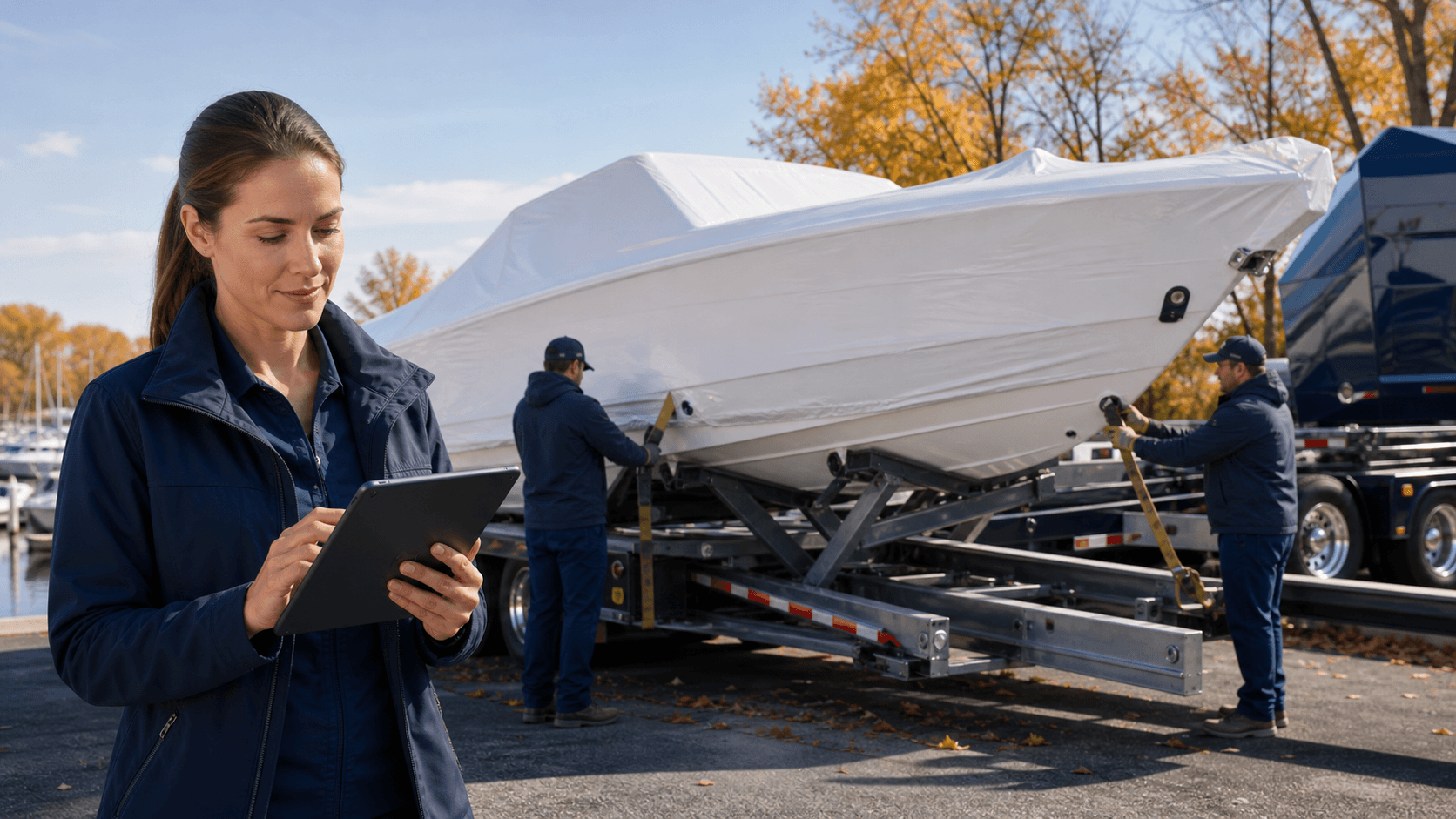
The right trailer and hauling setup can make a major difference during a winter move. Smaller boats may travel on a standard boat trailer, while larger or heavier vessels may require hydraulic trailers, lowboy equipment, permits, pilot vehicles, or special loading support. We coordinate transport plans after reviewing the boat's size and weight, rather than treating every vessel the same.
Seasonal route planning also deserves attention. Low bridges, road restrictions, mountain weather, high-wind areas, construction zones, and state permit requirements can affect how a move is arranged. A thoughtful route helps support safer handling and more dependable timing.
Before choosing a carrier, ask about licensing, insurance, cargo protection, equipment capabilities, and how updates will be shared during transport. For moves involving ports or international destinations, we can also coordinate related container shipping, freight, and drayage needs when they apply.
Delivery takes planning, too. The receiving location should have enough room for the truck, boat, and unloading equipment. Storage facilities and marinas may have limited hours or require a receiving contact to be present, so those details should be confirmed before the boat is on the road.
Reserve Your Winter Move with Confidence
Weather, carrier availability, permit processing, marina schedules, and long-distance routing can all affect pickup and delivery windows. Providing accurate vessel details early helps us build a transport plan that fits the move, including the right equipment and access needs at both ends.
Before winter conditions tighten schedules, gather your boat measurements, photos, paperwork, marina information, and storage or delivery instructions. A well-prepared boat and a confirmed receiving plan can make the entire seasonal move feel far more organized from pickup through delivery.
Keep Your Winter Boat Move on Track
BoxBee Logistics can help you coordinate dependable boat transport services that fit your timeline and handling needs. Our team is ready to discuss trailer transport details and answer questions before your scheduled move. Contact us to request assistance with your upcoming transport.